

This post is also available in:
Hi fellow valley-dwellers,
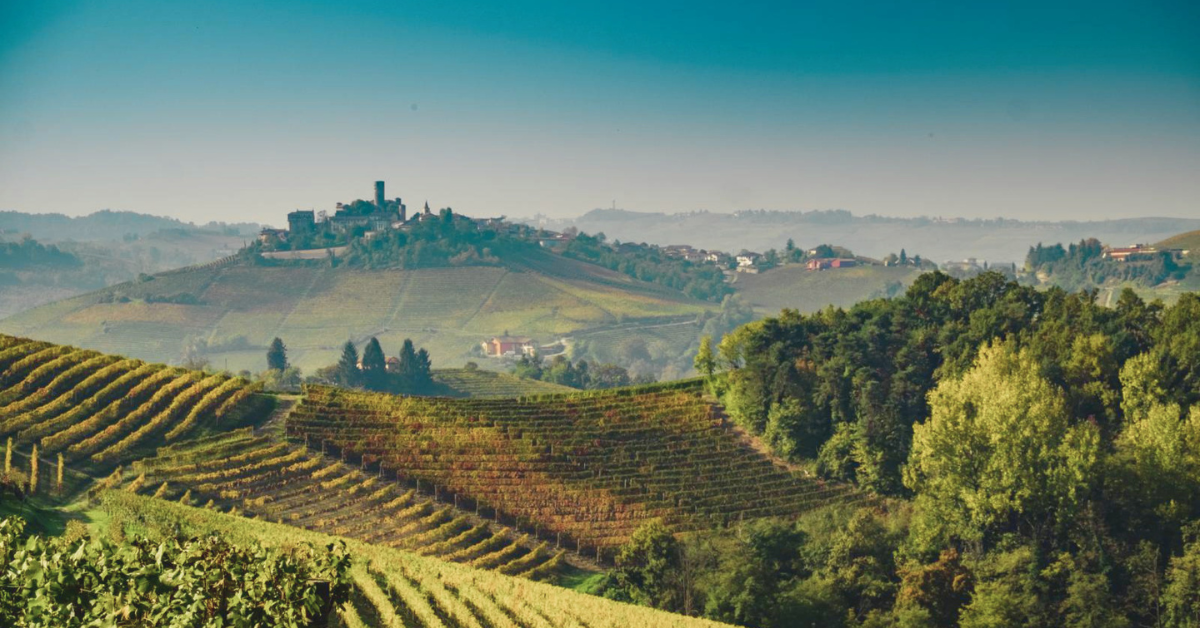
Today we are going to discover a place in Piedmont that offers great surprises: The Langhe! A landscape that doesn’t raise its voice, but knows how to stay with you. It creeps in slowly, between one hill and another, between a row of vines and a road that curves without haste.
They aren’t just a territory. They are a way of being in the world.
What the Langhe really are
The Langhe stretch across southern Piedmont, between the provinces of Cuneo and Asti, like a system of soft hills that seem to breathe together.
There is no sharp border, but a succession of landscapes that change imperceptibly:
from the Langa of Barolo to the Langa of Barbaresco, up to the quieter and more secluded Alta Langa.
It is a land shaped by man without ever being forced, also recognized as a UNESCO World Heritage site for its cultural landscape linked to viticulture.
Everything here is balance.
Wine: time in a glass
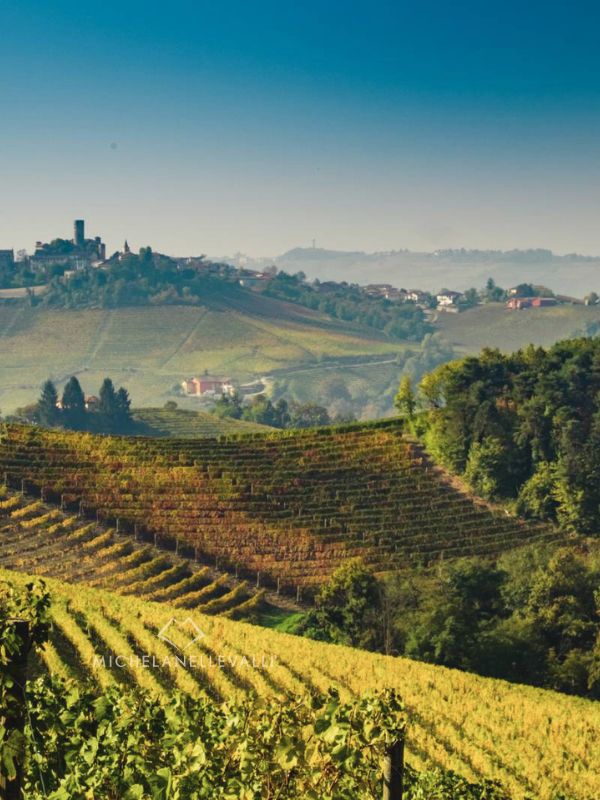
Talking about the Langhe means entering the world of wine, but without superficiality.
Barolo, Barbaresco, Nebbiolo… these aren’t simply famous labels.
They are slow expressions of a territory that works for the long term, that accepts the wait.
Here, wine is never just a tasting.
It is a story that unfolds over time.
The hazelnut: the measure of the earth
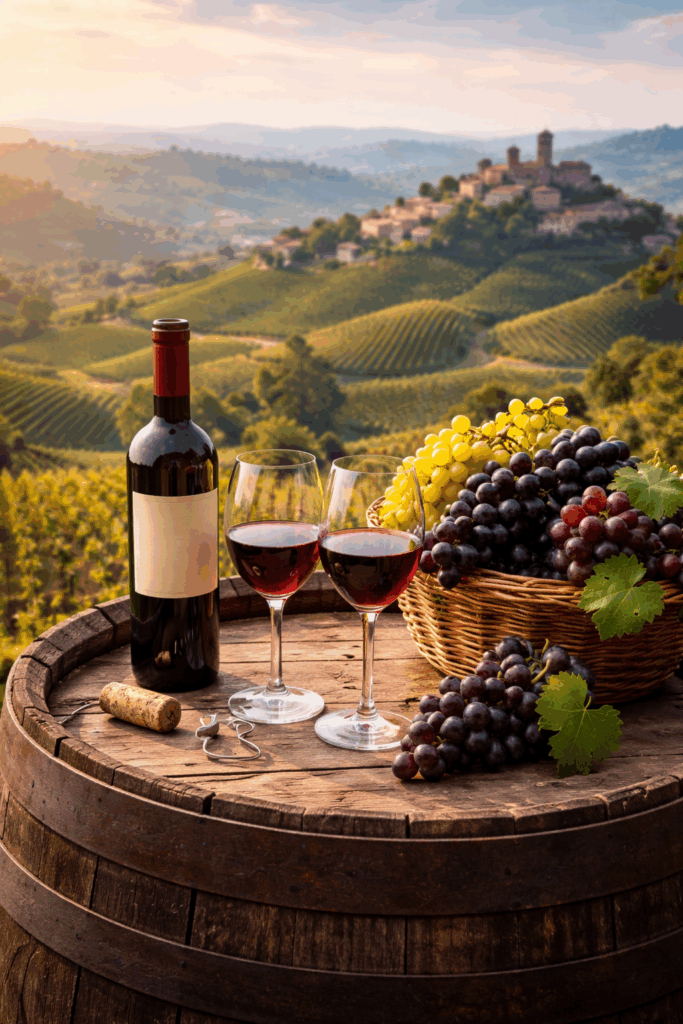
The Tonda Gentile of the Langhe is perhaps one of the most delicate symbols of this territory.
It doesn’t need a stage.
It lives in the hands, in repeated gestures, in seasons that chase each other, always the same and always different.
It is a discreet luxury.
The kind that doesn’t need to be declared.
The Alba white truffle: what remains unseen
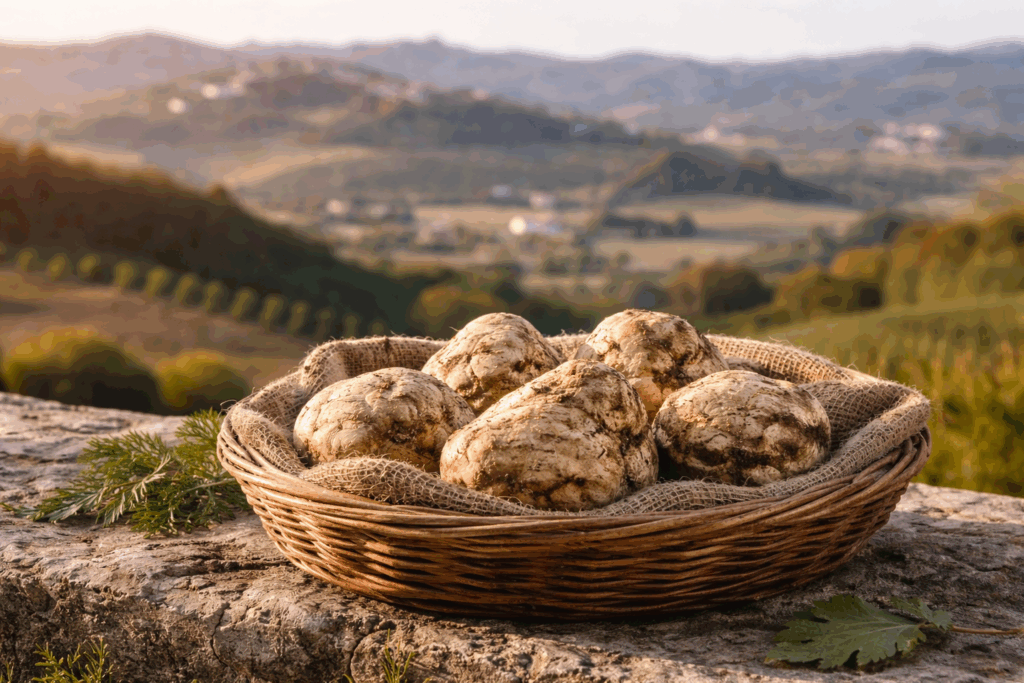
The white truffle is born underground, invisible, unpredictable.
It isn’t farmed.
It is hunted.
And that is exactly what makes it so powerful:
in the Langhe, even what you cannot see becomes central.
An entire territory moves around something that cannot be controlled.
The cities and towns that shape the Langhe
There are places that act as reference points, almost as if they were gateways to this landscape.
Alba, considered the capital of the Langhe, is the center from which everything branches out.
Then there are the wine towns, those that give their names to the hills:
- Barolo
- Barbaresco
- La Morra
- Monforte d’Alba
- Serralunga d’Alba
- Neive
- Grinzane Cavour
These are villages that emerge from the hills like natural extensions of the ground, each with its own precise identity, often gathered around castles, towers, and viewpoints.
But the truth is that the Langhe don’t end here.
There are dozens of small villages, more hidden, less talked about, which still preserve a more authentic rhythm, far from any logic of fast-paced tourism.
The museums of the Langhe
In the Langhe, museums are small outposts of memory, distributed among hills and villages. Some of the most significant include:
- WiMu – Barolo Wine Museum (Falletti Castle, Barolo)
- Grinzane Cavour Castle (oenological and historical museum)
- Corkscrew Museum (Barolo)
- Magic Museum (Cherasco)
- Federico Eusebio Civic Museum of Archaeology and Natural Sciences (Alba)
- Local ethnographic museums in small villages, dedicated to rural life and the trades of the past
Small places, often quiet, but capable of conveying the deep sense of these hills.
A noble territory with a peasant soul
Over time, the Langhe have learned to dialogue with the world without ever losing their essence.
Today they are considered one of the most refined expressions of the Italian landscape, visited by those seeking beauty, silence, and quality. Well-kept residences, designer wineries, and tables that tell the story of tradition with elegance.
Yet, beneath this more visible surface, something much older remains intact.
A peasant soul made of simple gestures, of respected seasons, of work that cannot be improvised.
Knowledge that wasn’t born to be shown, but to be lived.
This is precisely what makes the Langhe a noble place in the most authentic sense of the term:
not for what they exhibit, but for what they safeguard.
Because here, luxury is never separated from the earth.
It walks with it.
And it continues, silently, to take shape from it.


